

I Tried Running My Calendar Through AI for 30 Days


I Tried Running My Calendar Through AI for 30 Days
My calendar used to be a crime scene.
Back-to-back meetings, no breaks, focus time that existed only in theory. I'd end every day exhausted and somehow behind. The worst part? I'd done it to myself, one polite "sure, that works" at a time.
So I ran an experiment. For thirty days, AI managed my calendar — defending my focus blocks, triaging requests, and saying the no I couldn't say myself. It was uncomfortable. It also worked.
Quick Answer
Running my calendar through AI for 30 days reclaimed roughly two hours of deep-focus time per day by doing three things I was too conflict-averse to do myself: protecting blocks of real work, batching meetings into windows, and declining or redirecting low-value requests. The machine had no problem saying no. That was the entire unlock.
Why my calendar was broken in the first place
The honest diagnosis: I have a hard time disappointing people in real time.
Someone asks for "just 30 minutes" and my mouth says yes before my brain checks the cost. Do that ten times a week and your week is gone, sliced into confetti, with no slab of time big enough to do anything that matters.
The problem was never time management as a skill. It was the social discomfort of protecting my time. I knew exactly what I should do. I just couldn't make myself do it while a real human was waiting for an answer. Decades of research on the cost of fragmented attention, much of it summarized by the American Psychological Association, backs up just how expensive those constant interruptions really are. It's also the throughline of the honest truth about AI productivity tools in 2026: the tool rarely supplies intelligence — it supplies the enforcement you keep dodging.
That's the gap AI filled. Not intelligence. Spine.
 Photo by Alpha En on Pexels
The rules I gave it
I didn't let AI run wild on my schedule. I gave it a constitution — clear rules it enforced without flinching.
- Two protected deep-work blocks a day, mornings, non-negotiable. Nothing books over them.
- Meetings only in two windows, early afternoon and late afternoon. Outside those, the answer is no.
- Every request gets triaged first. Could this be an email? Then it's an email, with a suggested reply.
- A hard daily cap on meeting hours. Past the cap, new requests roll to the next open window.
- A 15-minute buffer between everything. No more sprinting from call to call with no breath.
The rules were mine. The enforcement was the AI's. And enforcement, it turns out, was the part I'd always been missing.
I knew all the productivity advice. What I lacked was something that would actually say no while I wasn't looking.
What the first week felt like
Awful. Genuinely.
The AI declined a meeting I would have accepted out of guilt. It suggested an async reply instead of a call I'd already half-promised. I felt the urge to override it constantly, and a few times I did.
But by day five something shifted. The world didn't end. The person whose meeting got redirected to email replied "great, even easier." The deep-work blocks filled with actual deep work, and I finished a project that had been "in progress" for a month.
The discomfort was the point. Every protected hour cost me a small social pang — and bought me a large block of real output. The trade was lopsided in my favor. I'd just never let myself make it.
 Photo by Tom Fisk on Pexels
The numbers after a month
I tracked deep-focus hours, meeting hours, and a rough end-of-day energy score. Here's the before and after.
| Metric | Before | After 30 days |
|---|---|---|
| Deep-focus hours/day | ~1.5 | ~3.5 |
| Meeting hours/day | ~5 | ~2.5 |
| Meetings declined or made async | almost 0 | ~6/week |
| End-of-day energy (1–10) | 4 | 7 |
I roughly doubled my focus time and halved my meeting load. The energy number is soft and self-reported, but the difference was real enough that my evenings stopped feeling like recovery.
The meetings that survived were better, too. Scarcity forced everyone to bring an actual agenda instead of "let's just hop on a call."
The triage that did the quiet heavy lifting
The flashy part of this experiment was the AI defending my focus blocks. The part that actually saved the most time was boring: triage.
Roughly a third of the meeting requests I get don't need to be meetings. They're a question, a quick decision, a status check — things that resolve in two emails but that I'd habitually turn into thirty-minute calls because saying "let's hop on a call" is the path of least resistance.
The AI's job was to catch those before they hit my calendar. Every request got a quick read: does this genuinely need synchronous, real-time conversation, or is it a question wearing a meeting's clothes? If it was the latter, it drafted a polite async reply with the answer or the next step, and I just approved it.
That single filter recovered more hours than the focus blocks did, which is exactly the kind of unglamorous, dependable win I dig into in the underrated AI use case nobody is talking about. The lesson stuck with me: the cheapest meeting is the one that never gets scheduled. Most of us never run that filter because, in the moment, agreeing to a call feels faster than thinking about whether the call is necessary. A system doesn't have that bias. It just asks the question every time.
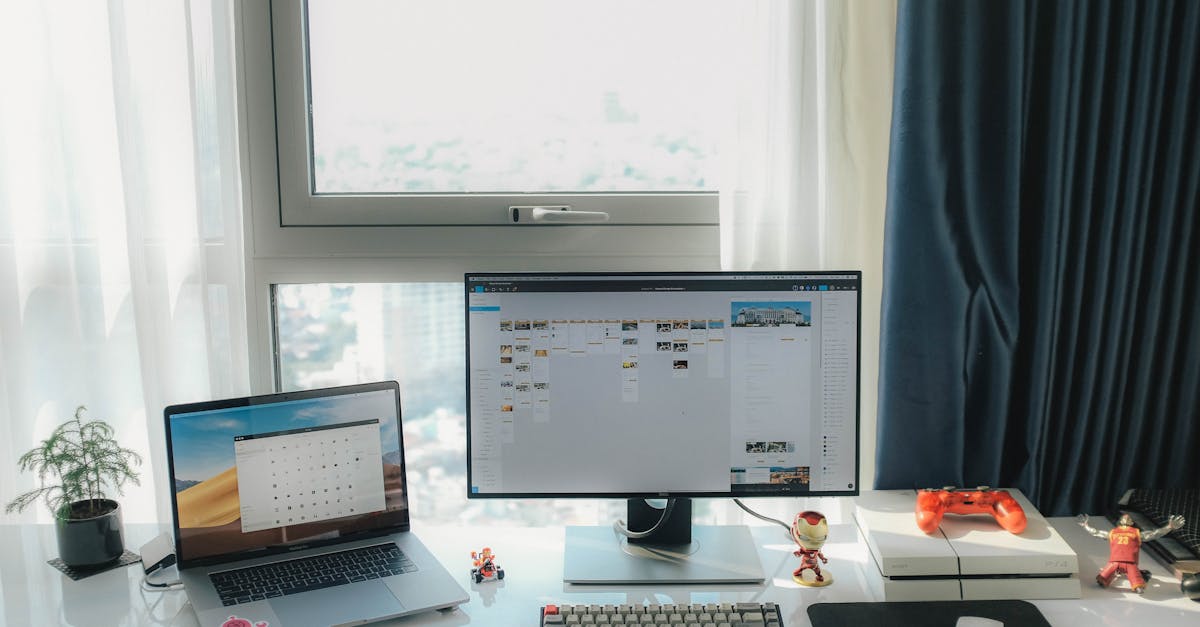 Photo by Huy Phan on Pexels
What I got wrong
It wasn't all clean. Two mistakes worth flagging.
First, I over-automated early. I let the AI decline things it shouldn't have — a genuinely important relationship-building chat got bumped to email and that was the wrong call. Some meetings are the work, not an interruption to it. I had to teach it the difference.
Second, I underestimated how much I'd resist my own rules. The system was only as strong as my willingness to not override it. The first time I caved and stacked four meetings in a "no" window, the whole day collapsed back into the old chaos.
The fix for both was the same: tune the rules, then trust them. Automation that you constantly override is just a slower way to do it manually.
The unexpected side effect: I got better at saying no myself
Here's the part I didn't see coming. After thirty days of watching a machine decline things gracefully, I started declining things gracefully too.
For years I'd assumed saying no required some kind of confrontation — a tense moment, a disappointed face, an awkward silence. The AI showed me it's mostly a formatting problem. It would decline a meeting and offer a faster async path in the same breath, and people responded warmly almost every time. "Happy to answer that by email instead — here's the short version." Nobody was offended. Most were relieved.
Seeing that play out, over and over, rewired something in me. I'd been catastrophizing the social cost of no. The actual cost was tiny, and usually it was negative — people appreciated the efficiency. I'd been protecting them from an imposition they didn't feel.
By the end of the month I was handling more of the no's myself, in the AI's style, because I'd finally internalized that a good no with a helpful alternative isn't rude. It's a gift of clarity. The system didn't just defend my time — it taught me a skill I'd avoided learning my whole career.
The machine wasn't braver than me. It just had no ego in the conversation. Once I borrowed that detachment, the no's got easy.
Would I keep doing it? An honest verdict
Thirty days ended, and the obvious question was whether to keep the system running or go back to managing my own calendar.
I kept it. But I loosened it. The strict version was the right way to break my old patterns — you need the rigid cast to set the broken bone. Once the new habits took, I relaxed a few rules so the system felt less like a warden and more like a sensible assistant who occasionally checks with me.
The two morning focus blocks stayed sacred. The meeting windows stayed, with a little more flexibility. The triage stayed exactly as strict as ever, because that's where the quiet hours come from. What I dropped was some of the rigidity around buffers and caps, which I now handle by instinct because the instinct finally exists.
That arc — strict to set the habit, loose to sustain it — is probably the real lesson of the whole experiment. Automation is most valuable not when it runs your life forever, but when it trains you into a better default and then steps back. The calendar got fixed. And so, a little, did I.
The bottom line
The experiment taught me something I didn't want to hear: my calendar was never a logistics problem. It was a courage problem.
AI didn't make me smarter about time. It just held the line I'd always been too soft to hold myself.
So here's the uncomfortable question — how many hours a week are you giving away simply because saying no in the moment feels worse than being exhausted later?
Key Takeaways
- AI calendar management works by enforcing rules you already know but avoid—like protecting focus blocks, batching meetings, and declining low-value requests—without social hesitation.
- Triage is the quiet time-saver: ~30% of meeting requests can be resolved async (e.g., via email) if you force the question before accepting; AI removes the bias to default to calls.
- Strict rules (e.g., fixed meeting windows, daily caps) are necessary to break old habits, but can be relaxed once new defaults (like instinctive buffers) form—rigidity trains, flexibility sustains.
- Saying no becomes easier when paired with a helpful alternative (e.g., 'Happy to answer this by email—here’s the short version'). People rarely resist; they often prefer efficiency.
- The biggest barrier to better time management isn’t logistics—it’s the discomfort of disappointing others in real time. AI provides the 'spine' to enforce boundaries you’d otherwise override.
- Automation’s real value isn’t permanent control—it’s teaching you skills (like graceful declines) so you eventually internalize the behavior and no longer need the tool’s rigidity.
Frequently Asked Questions
Doesn't this make you seem rigid or hard to reach?
The opposite, surprisingly. Clear windows make you more reliable — people know exactly when they can get you, instead of fishing through a maze of half-open slots.
What if something urgent comes up?
Real urgency overrides any system. The rules handled the 95% of requests that only felt urgent. The genuine emergencies still got through.
Do I need special software?
A capable AI assistant connected to your calendar covers most of it. The logic matters more than the brand of tool.
Isn't saying no rude?
Saying no to a meeting while offering a faster async path is generous, not rude. You're protecting their time too.
More from Assisters


Recommended for you


Comments
Sign in to join the conversation
No comments yet. Be the first to share your thoughts!