

The Focus Ritual I Steal From Athletes
The Focus Ritual I Steal From Athletes
Watch a tennis player before a serve sometime. They bounce the ball the same number of times. Adjust the strings. Take the same breath. Every single time, identical, almost robotic.
That's not superstition. It's a switch. And the first time I understood what that ritual was actually doing, I realized I'd been approaching my own focus completely wrong — just sitting down and hoping it would show up.
So I stole the athletes' trick and built a focus ritual for my desk work. My ability to drop into deep concentration stopped being a daily coin flip and became something I could summon on command. Here's the ritual, and the psychology that makes it work.
Quick Answer
Elite performers use a pre-performance routine: a short, identical sequence of actions done right before they perform, every time. It's a trigger that tells the brain "we're switching into focus mode now." I built my own desk version — same actions, same order, before every deep work session — and it reliably flips me into concentration instead of leaving it to chance. Focus isn't a mood you wait for. It's a state you can cue.
Why "just focus" is terrible advice
Telling yourself to focus is about as effective as telling yourself to fall asleep. The harder you consciously try, the more it slips away.
Athletes figured this out a long time ago. You can't will yourself into a peak state by gritting your teeth — the pressure of trying actually makes it worse. So instead of chasing the state, they built a reliable path to it. They run a fixed sequence of small actions, and that sequence reliably summons the state as a side effect. The ball bounces aren't the focus. They're the doorway to it. Sport and performance psychologists at the American Psychological Association describe these pre-performance routines as a way to direct attention and steady arousal under pressure — exactly the conditions a desk worker faces on a chaotic morning.
I'd been doing the desk equivalent of standing at the baseline yelling "FOCUS" at myself. No wonder it was hit or miss. I had no doorway. I was just hoping I'd teleport into concentration, and getting frustrated when I didn't.
The fix wasn't more discipline. It was a doorway I could walk through the same way every time.
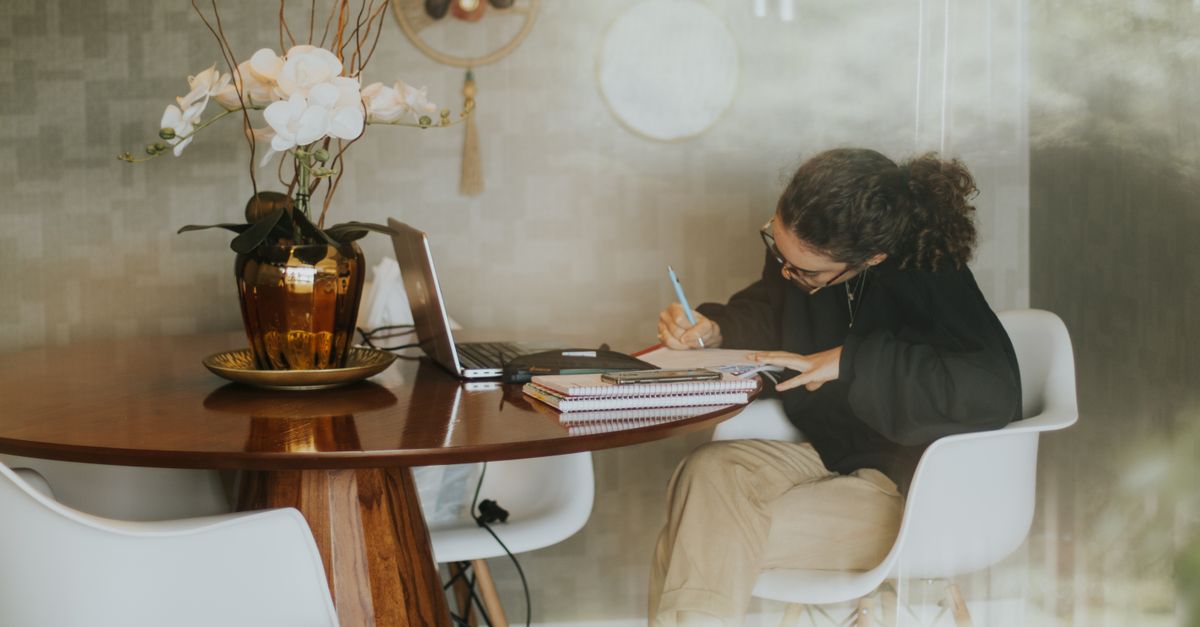
 Photo by Burst on Pexels
The four parts of any good ritual
Studying how athletes build these, I noticed they all share the same ingredients. A good focus ritual needs four things:
- It's identical every time. Same actions, same order. The repetition is what builds the association between the ritual and the state. Vary it and you weaken the trigger.
- It clears distractions. Part of the sequence physically removes the things that would pull you out — for a golfer, that's tuning out the crowd; for me, it's the phone and the tabs.
- It includes a body cue. A breath, a posture shift, a physical anchor. The body leads the mind into the state faster than thought alone.
- It ends with a clear "go." A definite starting signal — a word, an action — that says the preparation is over and the performance begins. No fuzzy edges.
The genius is that none of these require you to feel focused first. You just do the actions, and the focus follows. It's a backwards path: behavior first, state second. That's the part that makes it reliable when willpower isn't.
My exact desk ritual
Here's the literal sequence I run before every deep work block. It takes about ninety seconds and it's the same every single time:
- Phone goes in the drawer. A physical act of removal. The distraction leaves the room before the work starts.
- I close every tab and app except the one I'm working in. Clean screen, clean mind. Nothing in my peripheral vision to defect to.
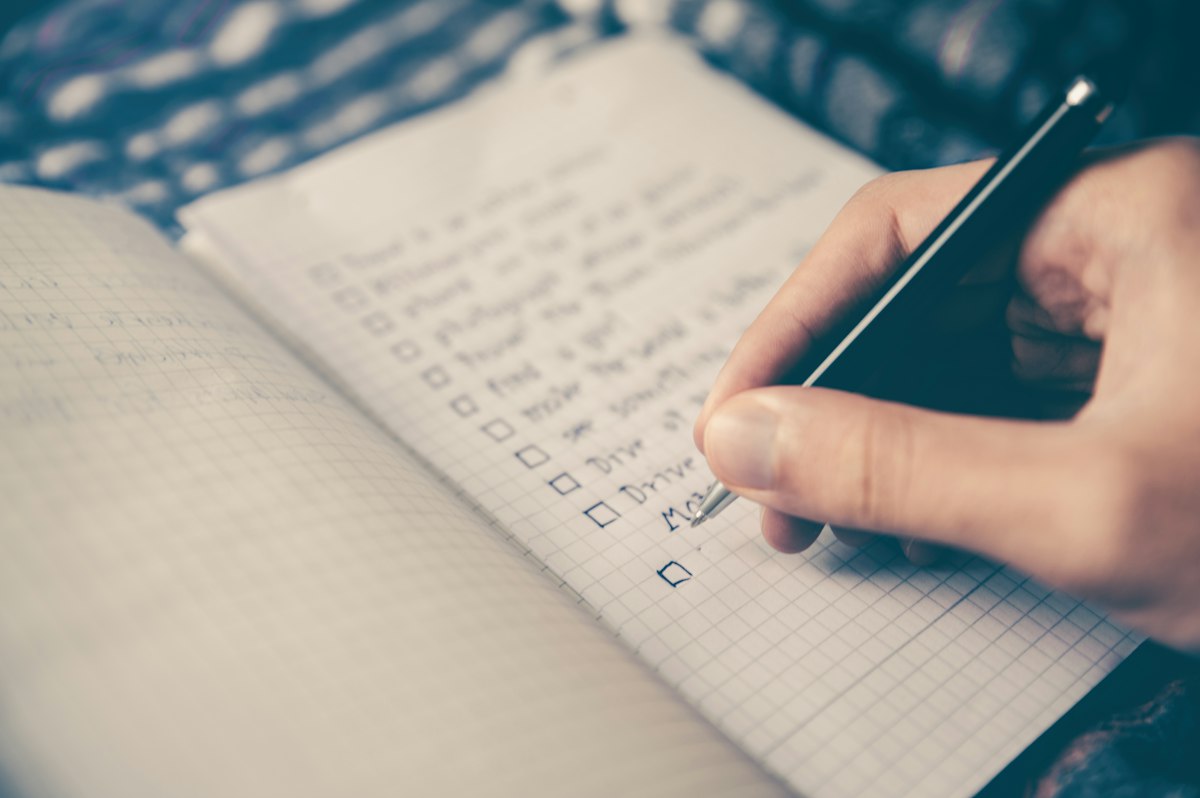
- I write the one task at the top of a blank page. Not the project — the single next action. The aim has to be specific before I can lock onto it.
- Three slow breaths. This is my body cue, stolen straight from the athletes. It drops the pace, settles the nervous system, signals "we're shifting now."
- I start a timer and say "go." Out loud, quietly. That word is my serve. Preparation over. Work begins.
By the time I've said "go," I'm already most of the way into focus — not because I forced it, but because I walked the same path I always walk, and my brain knows where that path leads. The ritual did the heavy lifting before the work even started. It's the on-ramp to the deep blocks I describe in how I protect two hours of deep work a day — the ritual gets me in the door, the defended slot keeps me there.
You don't summon focus by wanting it. You summon it by building a door and walking through the same door every time.
The week the ritual proved itself
I was skeptical at first. It felt a little theatrical, doing breaths and saying "go" to myself like I was about to serve at a championship. Then I had a brutal week — stressed, scattered, the kind of week where focus usually evaporates entirely.
Old me would've been useless that week. But the ritual didn't care how I felt. I ran the sequence anyway — drawer, tabs, task, breaths, "go" — and to my genuine surprise, I dropped into focus almost as well as on a calm day.
That's when I really got it. The whole value of a ritual is that it works especially on the bad days. On good days you barely need it. On bad days, when your mood and motivation have abandoned you, the ritual is a path that doesn't depend on either. You don't have to feel ready. You just have to walk the steps, and the steps carry you. Athletes run their routine in the biggest, most terrifying moments precisely because that's when "just focus" fails hardest.
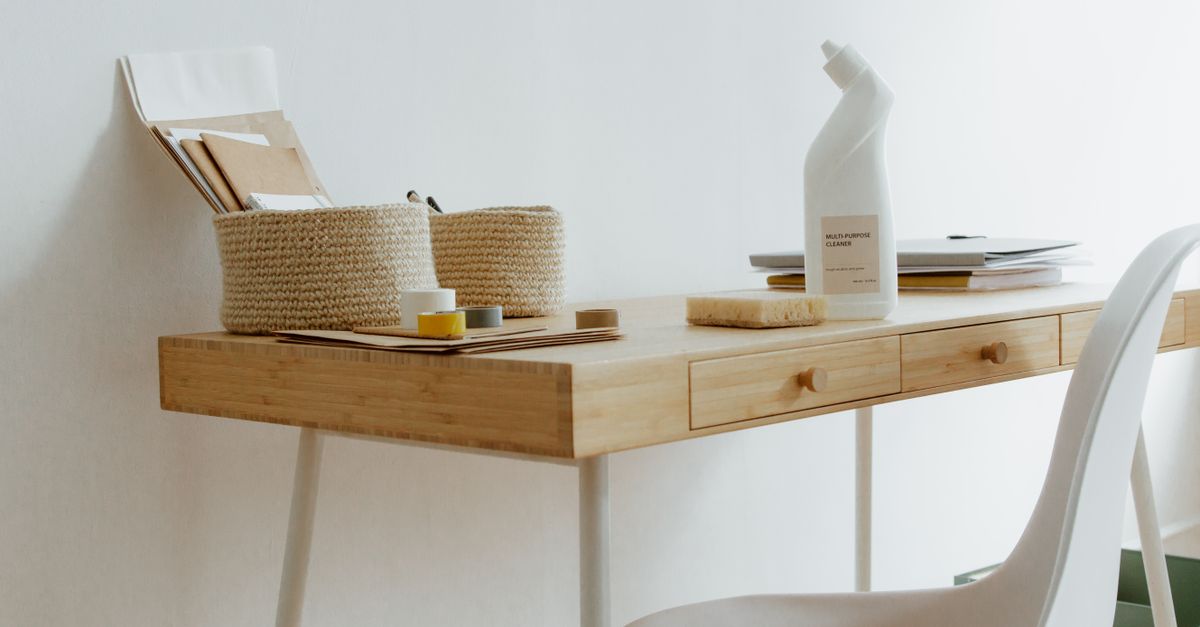 Photo by Ron Lach on Pexels
How to build your own
Don't copy mine exactly — build one that fits your work and your space. Here's how:
- Pick a clear start to your performance. A deep work block, a writing session, a focused call. The ritual needs a specific thing it precedes.
- Choose 3–5 small actions that clear distractions, anchor your body, and aim your attention. Keep it short enough that you'll actually do it every time.
- End with a definite "go" signal. A word, an action, anything unmistakable. The clear edge matters more than it sounds.
- Run it identically, every time, for two weeks. The power comes from the repetition. The first few times feel like nothing; the association builds quietly underneath.
- Let automation clear the runway. Anything routine that would interrupt the session — sorting messages, handling small tasks — hand to AI assistants and simple automations beforehand, so the ritual leads into truly clean focus.
The whole thing should take under two minutes. If it's longer, you'll skip it on busy days, which are exactly the days you need it most.
The other half athletes know: the shutdown
There's a second ritual athletes use that I stole later, and it's just as important as the start-up: the shutdown.
Watch a player after a bad point. The good ones have a tiny routine to let it go — a deliberate breath, a glance at the strings, a reset — so the last mistake doesn't poison the next point. They don't carry the bad serve into the good one. They have a ritual for closing the loop, not just opening it.
I'd been ending my work sessions by just… drifting off. The block would dissolve into checking my phone, the work bleeding into the rest of the day with no clean edge. So I built a shutdown to mirror the start-up: when the timer ends, I write one line on what I got done and what's next, close the tabs, and take a single breath that says "that's the end of focus mode." Then I step away on purpose.
That clean ending does two things. It stops the work from haunting me afterward — the loop is closed, the next step is written, so my brain can actually let go. And it makes the next session easier to start, because I walk in already knowing where I left off. The start-up ritual flips focus on; the shutdown flips it cleanly off. Together they turn focus into something with sharp edges instead of a vague smear across the whole day.
Athletes don't just have a routine for stepping onto the court. They have one for stepping off it too. The performance and the recovery both deserve a door. This pair of rituals became one of the most reliable parts of the productivity system that survived my burnout — design your own ninety seconds and run it tomorrow.
The bottom line
I spent years treating focus like weather — something that either showed up or didn't, and all I could do was hope. Athletes taught me it's not weather. It's a state you can cue, with a short sequence of actions you run the same way every time.
Build the door. Walk through it the same way, especially on the days you don't feel like it. Your focus stops being a coin flip and starts being something you can summon — drawer, tabs, task, breath, go.
So here's the steal, free of charge: what would your serve look like? Design the ninety seconds before your most important work, run it tomorrow, and watch your focus stop being a matter of luck.
Key Takeaways
- Replace 'trying to focus' with a pre-performance ritual: a short, identical sequence of actions before deep work that cues your brain to switch into focus mode, modeled after athletes' pre-serve routines.
- Design your ritual with four critical parts: identical repetition (same actions, same order), distraction removal (e.g., phone in drawer, tabs closed), a body cue (e.g., three slow breaths), and a clear 'go' signal (e.g., a word or timer start).
- Run the ritual especially on chaotic or low-motivation days—its value lies in providing a reliable path to focus when willpower fails, not just when conditions are ideal.
- Build a shutdown ritual to mirror your start-up: close tabs, note next steps, and take a deliberate breath to end focus mode cleanly, preventing work from bleeding into the rest of your day.
- Keep the ritual under two minutes and automate or delegate any preparatory tasks (e.g., clearing messages) beforehand to ensure the sequence leads directly into uninterrupted focus.
- Stick to one core ritual for all tasks to strengthen the trigger; minor tweaks are fine, but too many variations weaken the association between the ritual and the focus state.
Frequently Asked Questions
Doesn't this just feel like superstition?
The actions aren't magic — but the association they build is real and trainable. You're conditioning a trigger, the same way a smell can drop you into a memory. It only feels superstitious until you've felt it work on a bad day.
How long until the ritual "takes"?
Usually a couple of weeks of identical repetition. The first sessions, the ritual is just actions. Over time your brain learns that this sequence means focus, and it starts delivering the state on cue.
What if I have to focus somewhere with no setup?
Build a portable version — even just three breaths and writing your one task works anywhere. The body cue and the clear aim are the irreducible core; the rest is luxury you can drop when you have to.
Can I have different rituals for different tasks?
Better to keep one core ritual so the trigger stays strong, then add tiny tweaks per task if needed. Too many variations dilute the association. One reliable door beats five fancy ones.



Comments
Sign in to join the conversation
No comments yet. Be the first to share your thoughts!