
AI tools for game developers in 2026 accelerate asset creation, automate repetitive coding tasks, and enable richer NPC behavior — compressing development timelines dramatically.
AI for game developers spans two categories: developer-side tools (asset generation, code assistance, testing) and runtime AI (NPC behavior, adaptive difficulty, procedural content). In 2026, both categories have matured significantly, with Unity, Unreal Engine, and Godot all integrating AI-native features.
The Game Developers Conference (GDC) 2025 State of the Industry Report found that 71% of game developers are now using AI tools in their workflows. Newzoo estimates the global games market at $221 billion in 2026, with indie and mid-size studios under pressure to match AAA production values with smaller teams. AI is the equalizer — a solo developer using AI asset generation can produce visual quality previously requiring a full art department.
| Without AI | With AI |
|---|---|
| Weeks to create tileset textures | AI textures in hours |
| Manual NPC scripting with limited dialogue trees | LLM-powered NPCs with dynamic conversation |
| Playtesting bottlenecked by human testers | Automated AI playtesting agents |
| Procedural systems requiring specialized engineers | No-code procedural generation tools |
| Tool | Use Case | Free Tier | Best For |
|---|---|---|---|
| Meshy AI | 3D model and texture generation | Yes (limited) | 3D asset creation from text/image |
| Leonardo.Ai | 2D sprites, concept art, textures | Yes | 2D and concept art generation |
| Unity Muse | Coding assistance, animation, behavior trees | Subscription | Unity developers |
| Inworld AI | Runtime NPC dialogue and personality | Free tier | Dynamic NPC conversations |
| GitHub Copilot | Game logic code generation | No ($10/mo) | All coding tasks |
| Scenario.gg | Consistent game asset generation | Yes | Art style-consistent sprite sheets |
| Ludo.ai | Game ideation and market research | Yes | Game concept validation |
| Playtestcloud AI | Automated playtesting and UX analysis | No | Playtesting bottleneck removal |
Step 1: Concept and Ideation Use Ludo.ai to validate game concepts against market trends, identify gaps in genre saturation, and generate mechanic ideas. It analyzes thousands of games to surface opportunities.
Step 2: 2D Asset Generation Leonardo.Ai and Scenario.gg generate sprite sheets, tilesets, and UI elements in a consistent art style. Upload reference art, define the style, and batch-generate asset variations.
Step 3: 3D Asset Generation Meshy AI converts text descriptions or 2D concept art into game-ready 3D models with UV-mapped textures. Export directly to .fbx or .glb for Unity/Unreal import.
Step 4: Code Generation GitHub Copilot and Unity Muse write boilerplate game logic — inventory systems, character controllers, pathfinding wrappers — while you focus on unique mechanics. Always review generated code for bugs and performance issues.
Step 5: NPC Behavior Inworld AI lets you define NPC personalities, knowledge, and goals, then delivers runtime LLM-powered dialogue. NPCs respond dynamically to player actions rather than following scripted dialogue trees.
Step 6: Procedural Content AI-assisted procedural generation tools in Unity (PCG framework) and Unreal (PCG graph) use machine learning to create varied, natural-feeling environments without hand-crafting every element.
Step 7: Automated Playtesting Playtestcloud and GameCI AI agents simulate thousands of playthroughs, identifying soft-lock bugs, difficulty spikes, and UX friction points — faster and cheaper than manual testing.
A: No, but the roles are evolving. AI handles repetitive asset generation and boilerplate code, while artists focus on direction, style definition, and unique hero assets. Programmers focus on systems design rather than writing every line from scratch.
A: Check each tool's terms of service. Most AI asset generators (Meshy, Leonardo.Ai, Scenario) allow commercial use of outputs. Midjourney requires a paid plan for commercial use. Always verify before shipping.
A: Unity Muse includes Muse Chat (code and behavior assistance), Muse Animate (AI animation from motion description), and Muse Texture (procedural texture generation). Sentis enables on-device ML model inference.
A: Inworld AI provides an SDK for Unity and Unreal. You define NPC characters with personality traits, goals, and knowledge domains. At runtime, the SDK connects to Inworld's API to generate contextual dialogue responses.
A: GitHub Copilot works well with GDScript. The Godot community has built open-source AI integrations using local LLMs (Ollama) for code assistance. Asset generation tools are engine-agnostic.
A: DeepL API and ChatGPT handle game text translation at a fraction of traditional localization costs. AI voice tools like ElevenLabs generate localized voiceover from existing scripts.
AI is compressing indie game development timelines by months. Whether you're a solo developer building a passion project or a mid-size studio racing to ship, integrating AI into your asset, code, and testing pipelines will be a competitive necessity in 2026.
Find more developer tools and resources at misar.blog.
The rise of "vibe coding" has transformed how founders and developers build software—turning abstract ideas into working prototypes in minut…
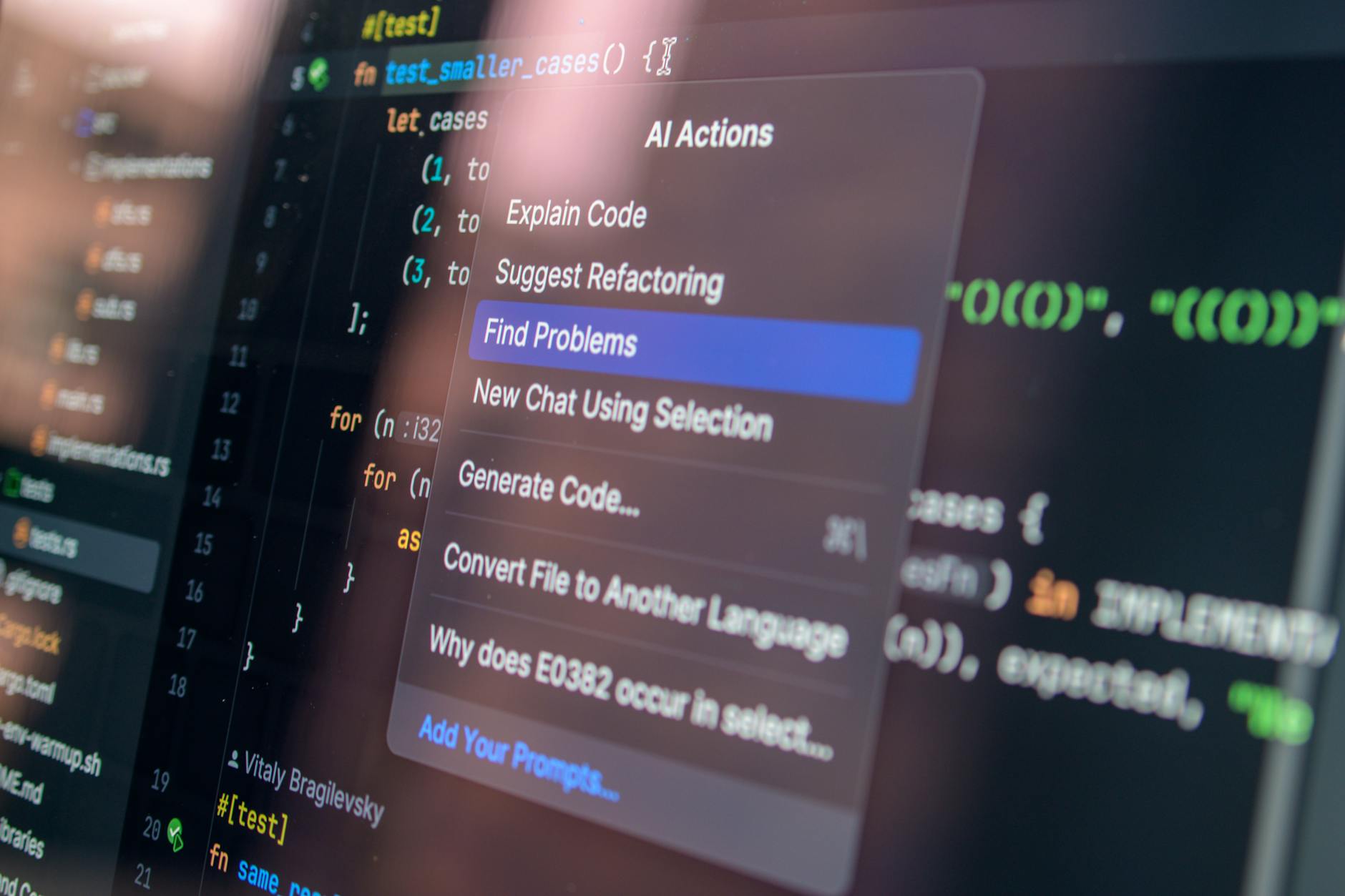
Developers building AI assistants today face a critical choice: which AI Assistant SDK will help them embed, train, and ship faster? The rig…

When building applications that require intelligent assistance—whether for customer support, internal workflows, or user-facing features—cho…







Comments
Sign in to join the conversation
No comments yet. Be the first to share your thoughts!