

Why Most Tutorials Make You a Worse Developer


Why Most Tutorials Make You a Worse Developer
For years I had a shameful secret. I'd completed dozens of programming tutorials, watched hundreds of hours of coding videos, and I still froze the moment I opened an empty file.
I knew the syntax. I'd "built" a to-do app eleven times. And I couldn't ship a single thing on my own.
I blamed myself for a long time. Turns out the problem wasn't my brain. It was the tutorial as a format — and what it quietly does to the way you think.
Quick Answer
Most tutorials make you a worse developer because they remove the single skill that matters most: deciding what to do next when nobody tells you. They train you to follow, not to choose. The fix isn't more tutorials. It's deliberately working without one before you're ready.
The short version:
- Tutorials hide the hard part: the decisions.
- Following along feels like learning but builds almost no transferable skill.
- You learn to code by getting stuck and clawing your way out.
The illusion of competence
Here's the trap. When you follow a good tutorial, everything works. The code runs. The app appears. You feel a warm glow of progress.
That glow is the problem. It's the feeling of understanding without the substance of it. Psychologists call it the fluency illusion — when something is easy to follow, your brain mistakes that ease for mastery. It's the same trap that snags so many early-career developers, which is part of why junior developers get stuck long after they've finished the courses.
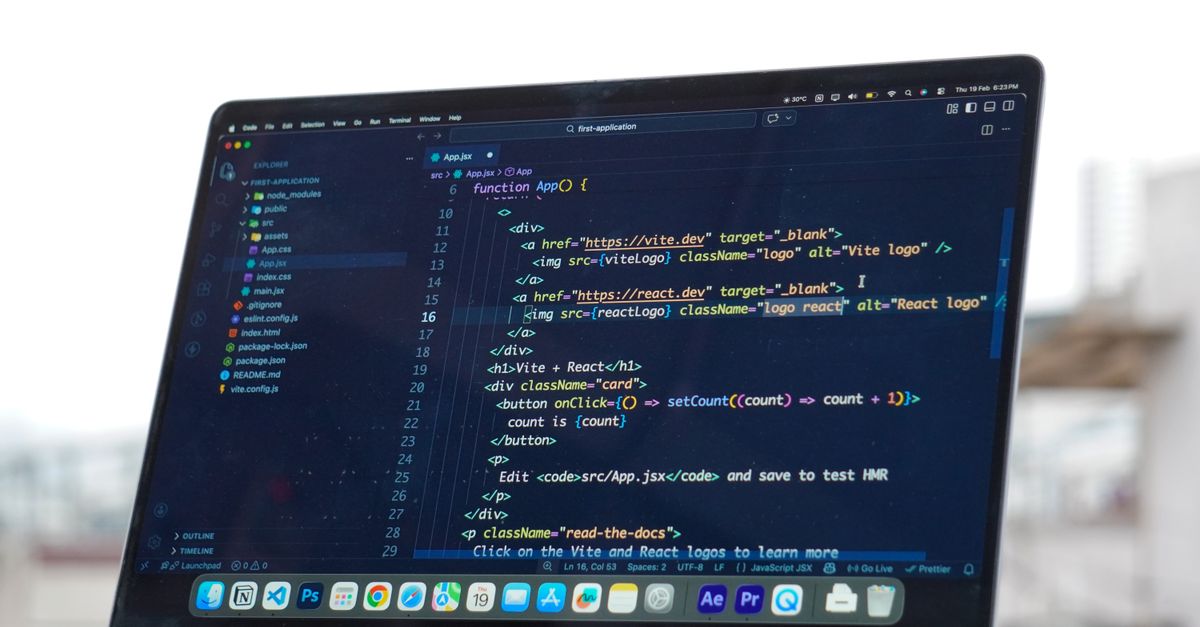
But you didn't make a single real decision. The instructor already chose the framework, the file structure, the variable names, the order of operations, the way to handle the error that came up. You just transcribed it.
Real development is almost entirely those decisions. The typing is the easy part. The job is choosing what to type next when there's no instructor and no next step on screen. That decision-making muscle is exactly the one I unpack in the brutal truth about becoming a senior developer — and it's the muscle tutorials quietly let atrophy.
 Photo by Mikhail Nilov on Pexels
Tutorial hell is real, and it has a shape
The term "tutorial hell" gets thrown around, but few people describe the actual mechanism. Here it is.
Every tutorial ends with you slightly more dependent than you started. You finish one feeling capable, then sit down to build something yourself, hit the first real decision, panic, and reach for another tutorial to make the bad feeling go away.
The discomfort of not knowing is the exact sensation of learning. So every time you flee it for the comfort of a guided video, you're running away from the thing you came for.
I escaped only when I noticed the pattern:
- I'd never been stuck for more than a few minutes — a tutorial always rescued me.
- I'd never chosen an approach and discovered halfway through that it was wrong.
- I'd never debugged anything I didn't already know the answer to.
Those three experiences — getting truly stuck, choosing wrong, debugging blind — are where developers are actually made. Tutorials skip all three.
What tutorials are genuinely good for
I don't want to be unfair. Tutorials aren't useless. They're just misused.
They're excellent for one thing: a fast, low-stress tour of unfamiliar territory. New language, new framework, new tool — a tutorial gives you a map. That's real value.
The mistake is treating the map as the journey. Here's how I think about it now:
| Use a tutorial to... | Don't use a tutorial to... |
|---|---|
| Get oriented in something new | Learn to build independently |
| See how the pieces connect | Replace your own decision-making |
| Copy a setup once, fast | Feel productive without risk |
| Unblock one specific concept | Avoid the discomfort of being stuck |
A tutorial is a guided tour of a city. Useful for an afternoon. But you don't actually know a city until you've gotten lost in it and found your own way home.
The thing that finally worked
I gave myself one rule: build something nobody has a tutorial for.
Not "build a to-do app." Build my to-do app, with the one weird feature I personally wanted, that no video covers. The moment there's no tutorial, you're forced into the real skill — reading documentation, searching error messages, making a call and living with it.
It was miserable at first. I spent an entire evening on a bug that turned out to be a typo. I chose a database approach, built half the app, and realized it was wrong. I felt stupid constantly.
That misery was the curriculum. Every one of those frustrations deposited something permanent that no smooth tutorial ever had.
You don't learn to swim by watching someone swim. At some point you have to get in the water and be bad at it.
A few concrete tactics that helped:
- Read the official docs before any video. They're drier and harder, which is the point — they force you to assemble understanding instead of receiving it. Reference material like the MDN Web Docs is written to be assembled, not narrated, which is exactly why it builds durable knowledge.
- When stuck, set a 20-minute timer before searching. Wrestle with it first. The struggle is what makes the eventual answer stick.
- Rebuild a tutorial project from memory, a day later. If you can't, you didn't learn it — you watched it. That gap is the most honest feedback you'll get.
 Photo by Christina Morillo on Pexels
Where AI fits (and where it makes things worse)
This matters more now, because AI assistants can hand you working code the way tutorials hand you working code. Same trap, faster.
If you let an AI make every decision and just paste the result, you're back in tutorial hell with a turbocharger. The fluency illusion gets stronger because the code is even more tailored to your exact problem.
But used the other way, the same developer tools become a brilliant tutor. Ask it why, not what. "Explain why this approach is better than the one I tried." "What are the trade-offs here?" "Walk me through this error before you fix it." Make it teach, not type. That's the difference between automation that grows you and automation that hollows you out.
The graduation test
Here's how I know someone has actually escaped tutorial hell, and how I knew I finally had: they can build something small, alone, with nobody's guidance, and survive the parts where it goes wrong.
Not build it well. Not build it fast. Just finish it without a tutorial holding their hand through every decision. That's the whole bar, and it's a surprisingly high one, because finishing means getting stuck and not running away.
I set myself a concrete graduation test, and I'd recommend a version of it to anyone. Pick a tiny project. Give yourself a deadline. And make exactly one rule: you may search for specific syntax and read documentation, but you may not follow a step-by-step tutorial for this particular thing. You have to make every decision yourself.
The first time I did this, it was humbling. I overestimated how much I "knew" by a wide margin. Things I'd watched a dozen times in videos, I couldn't reproduce when I had to choose for myself. But by the end I had something real — clumsy, imperfect, mine. And the confidence from that one finished project was worth more than the hundred tutorials before it.
The difference is night and day. After a tutorial you feel capable. After finishing a real thing alone, you are. One feeling lies to you. The other one you earned.
If you want more nudges like this toward building over watching, it's worth sticking around for the rest of these field notes.
The bottom line
Tutorials don't make you a developer. They make you good at following developers, which feels identical right up until you're alone with an empty file.
The skill you actually need is the one tutorials remove on purpose: deciding what to do next, getting it wrong, and recovering. You can only build that by leaving the guided path.
So here's the gentle nudge. Close the next tutorial after the intro. Open an empty file. Build the worst version of something you actually want. Be bad at it. That's not failing at learning to code. That is learning to code.
Key Takeaways
- Tutorials create a fluency illusion—following along feels like mastery but skips the critical skill of making independent decisions when no guidance exists.
- Real development is 90% decision-making (frameworks, structure, error handling); tutorials remove this entirely, leaving you unprepared for actual work.
- Escape tutorial hell by building something without a guide—even if it’s small, personal, and imperfect—before you feel ‘ready.’
- When stuck, set a 20-minute timer to struggle first; the discomfort of wrestling with problems is where durable learning happens.
- Use tutorials only for orientation (e.g., new frameworks), then immediately apply knowledge solo—never treat them as a substitute for independent work.
- The graduation test: Can you finish a tiny project alone, without step-by-step guidance, and survive the parts where it goes wrong? If not, you’re still in the illusion.
Frequently Asked Questions
So I should never do tutorials?
No. Do them to get oriented in something new, then close them and build. The rule is simple: a tutorial should be the start of learning a topic, never the whole of it. The instant you feel comfortable, that's your cue to go build alone.
How do I know if I'm in tutorial hell?
Ask yourself when you last built something with no guide. If the honest answer is "I can't remember" or "never," you're in it. The cure is one uncomfortable project, not one more course.
I get stuck for hours alone. Isn't that wasteful?
It feels wasteful and isn't. Time spent genuinely stuck is the highest-yield learning there is, because your brain is forced to build the search-and-reason muscle that defines the job. Cap it at a couple hours, then ask for a hint — not a full solution.
What should my first no-tutorial project be?
Something small that you personally want and that doesn't exist as a tutorial. A tiny tool that solves an annoyance in your own life. Personal motivation carries you through the discomfort that would otherwise send you running back to videos.






Comments
Sign in to join the conversation
No comments yet. Be the first to share your thoughts!