

Why Saving More Didn't Make Me Feel Secure


Why Saving More Didn't Make Me Feel Secure
I did everything the advice said. I saved aggressively, cut the lattes, built the buffer.
And I was still anxious about money. Not a little. The same tight, low-hum dread, now sitting on top of a much bigger number.
That confused me for a long time. If security comes from savings, and I had savings, where was my security? This is what I learned in the gap.
Quick Answer
Saving more didn't make me feel secure because security isn't a number, it's a nervous system state — and I was treating a feeling like it was a math problem. A bigger balance can't calm a brain that's running an old script about scarcity. What actually moved the needle was a mix of "enough" being defined on purpose, automating the saving so it stopped being a daily worry, and addressing the fear directly instead of trying to out-save it.
The number went up. The fear didn't move.
There's a quiet promise inside most money advice: hit this number and you'll relax.
I hit several numbers. I never relaxed.
The first time I had three months of expenses saved, I felt good for about a week. Then my brain decided three wasn't enough. Six months? Same thing. The goalpost moved every single time, because the part of me that was scared wasn't reading my bank statement.
I kept trying to fill an emotional hole with a financial bucket. The hole had no bottom.
This is the uncomfortable lesson. If your sense of safety is tied entirely to a balance, no balance will ever be enough, because there's always a scenario your imagination can invent that the number doesn't cover.
I've since met people with genuinely large savings who are more anxious than people with modest ones. At first that made no sense. Then I understood: their anxiety was never about the amount. It was a habit of mind, and a bigger balance just gave the habit a bigger thing to worry about losing. The dread scales with you. You don't outrun it by saving harder; you outrun it by changing the thing producing it.
If money worry were really a math problem, then crossing the "safe" number would switch it off. It never does, for anyone I've watched, which is the clearest evidence that it was never math in the first place.
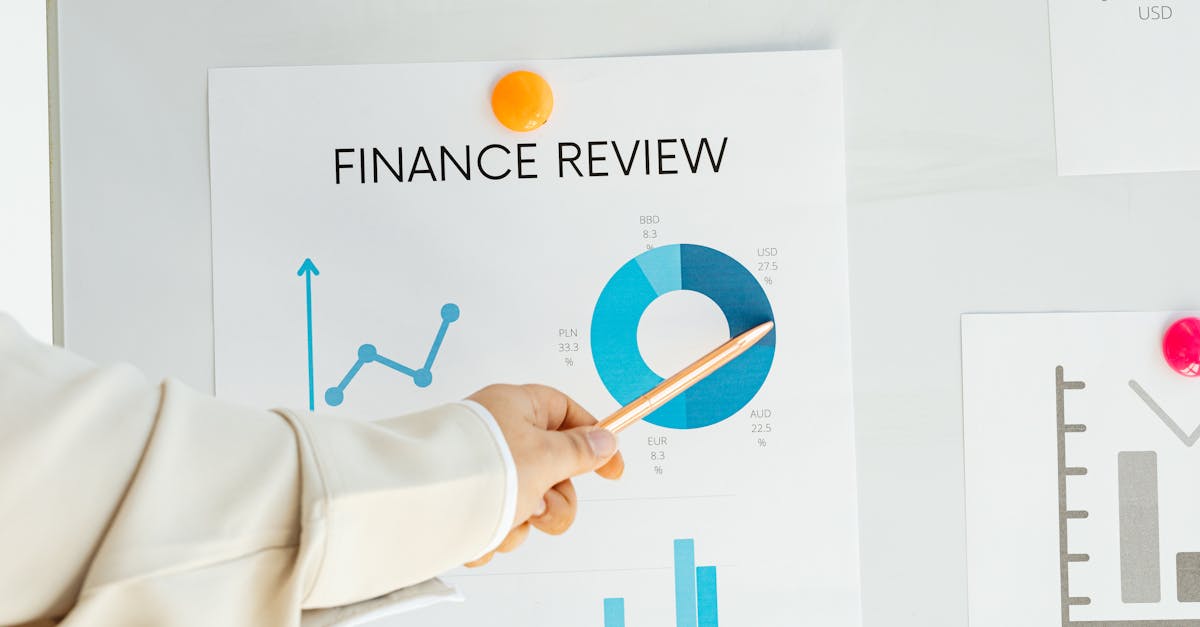
 Photo by Jakub Zerdzicki on Pexels
Where the fear actually came from
When I got honest, my money anxiety wasn't really about money. It was about not trusting myself to handle what might happen.
The fear was a story: if something goes wrong, I'll be helpless. Savings was my attempt to buy my way out of ever feeling helpless. But you can't buy your way out of an internal story. You have to update the story.
The things that genuinely reduced the fear weren't financial at all:
- Knowing I could earn money in more than one way, so a single job loss wasn't an apocalypse — which is partly why I eventually focused on the side income that finally stuck instead of just a fatter savings balance.
- Having handled a few small emergencies and seeing that I survived them.
- A specific, written plan for "what would I actually do if X happened" — so the worst case had a procedure instead of just a feeling.
Once I trusted my own ability to respond, a smaller cushion felt safer than a huge one had before.
That last sentence is the whole article, really. A modest buffer plus the belief that I can handle problems felt safer than a fat buffer plus the belief that I'm fragile. Security is the cushion times your confidence in yourself, not the cushion alone. I'd been pouring everything into one term of the equation and ignoring the one that actually multiplied it.
It also explained why some people with very little seem unshakeable about money. They've been broke, survived it, and learned in their bones that broke is not death. That lived proof is worth more than a spreadsheet, because the spreadsheet can always imagine a worse number, but the memory of I got through that can't be argued with.
Defining "enough" on purpose
Here's a move that sounds too simple to work, and worked anyway.
I sat down and defined what "enough" meant, in writing, with actual numbers. An emergency fund of a specific size. A savings rate I'd be proud of. A point at which I would consciously let myself stop worrying and redirect energy elsewhere.
The act of naming the finish line is what made the difference. Before, "save more" was an infinite instruction, and infinite instructions are anxiety machines. After, it was a target I could actually reach and then mentally close.
Consumer guidance from the Consumer Financial Protection Bureau makes a similar case: a savings goal works far better when it's tied to a concrete target than when it's an open-ended "save more."
| Without a defined "enough" | With a defined "enough" |
|---|---|
| Every balance feels insufficient | A clear point where you exhale |
| Saving is endless, joyless | Saving has a finish line |
| More money, same dread | Less dread at the same number |
| Goalpost moves forever | Goalpost stays put |
The number on my statement barely changed when I did this. The feeling changed completely.
That's the part I keep coming back to. I didn't add money to fix the anxiety. I added a finish line. The same balance that felt insufficient on Monday felt like enough on Friday, because on Friday it had a defined job and a point where I'd let myself stop worrying about it. Nothing financial changed. Everything emotional did. Which is the clearest proof I have that the dread was never really about the dollars.
Writing the finish line down also forced a useful honesty. Vague worry hides from inspection — it can always invent one more catastrophe. But once I had to write an actual number for "enough," I had to confront how much of my fear was realistic versus how much was just my imagination running a worst-case loop with no off switch. Most of it, when written down, turned out to be the loop.
Automating it so I stopped white-knuckling
Part of my dread was the daily decision. Every paycheck, I had to choose to save, and every choice was a tiny battle.
So I removed the choice. Automatic transfers moved money the day I got paid, into accounts I mentally treated as untouchable. The saving happened whether I felt disciplined or not.
This did something I didn't expect. It lowered my anxiety not because the number grew faster, but because I no longer spent mental energy on a recurring decision. The worry wasn't the money. The worry was the constant managing of the money. Automation quietly handled both.
 Photo by Monstera Production on Pexels
The shift from hoarding to building
The last piece was the hardest. I had to admit that past a certain point, I wasn't saving for security. I was hoarding out of fear, and hoarding has no off switch.
Real security, it turned out, looked more like building than stockpiling. Building skills that make me employable. Building a small side income. Building relationships I could lean on. Building the quiet confidence that I am not one bad month from collapse.
A pile of cash protects you from one kind of problem. A capable, connected, adaptable version of you protects you from far more. The cash matters, but it was never the whole answer, and I had been pretending it was. A lot of this came down to changing how I think about money at a deeper level, not just how much of it I'd stacked up.
I think of it now as diversifying my security the way you'd diversify investments. Cash is one holding. Skills are another. Relationships are another. A second income stream is another. Health is another. If all my security sits in the cash holding, I'm one expensive emergency or one bad year from feeling wiped out. Spread across several holdings, no single shock can take me down, and — this is the part that surprised me — I can keep a smaller cash pile and feel more secure, because it's no longer doing all the work alone.
The hoarding instinct fights this, because hoarding is simple and building is slow. But the calm I was chasing lived on the building side the whole time.
The bottom line
I thought security was a balance. Security turned out to be a state of mind backed by a few real capabilities, with savings as one ingredient, not the entire recipe.
If you've been saving hard and still feel that hum of dread, the problem probably isn't that your number is too small. It's that you're asking a number to do a job only your own sense of capability can do.
You can't out-save a fear you've never actually faced. Name your "enough," then go build the version of you that doesn't need an infinite cushion.
What would "enough" look like for you, written down, with a real finish line? That sentence might lower your blood pressure more than another month of cutting back.
If untangling the feeling of money from the math of it resonates, it's worth following along as I keep writing about the calmer side of personal finance.
Key Takeaways
- Define your 'enough' in writing with actual numbers to create a finish line for saving and reduce anxiety.
- Automating savings through automatic transfers can lower anxiety by removing the daily decision and recurring mental battle.
- Building skills, relationships, and a second income stream can provide more security than a large cash reserve alone.
- Diversifying security by investing in multiple 'holdings' such as cash, skills, relationships, and health can reduce vulnerability to financial shocks.
- Naming and confronting the root causes of money anxiety, such as self-trust and fear of helplessness, is crucial to overcoming it.
Frequently Asked Questions
So should I stop saving?
No. Keep an emergency fund and keep saving toward goals. The point is to define what "enough" looks like so saving has a finish line, instead of being an endless source of low-grade fear.
How big should an emergency fund actually be?
A common starting point is three to six months of essential expenses, but the right number is the one that lets you exhale. Define it on purpose, reach it, and then let yourself redirect energy elsewhere.
What if my anxiety stays even after I do all this?
Money anxiety is often about self-trust, not the balance. Building a second income skill, rehearsing your "what if" plan, and noticing that you survived past emergencies tend to calm the fear more than another spreadsheet does.



Comments
Sign in to join the conversation
No comments yet. Be the first to share your thoughts!