

Decentralized GPU Networks: Infrastructure, Economics, and AI Training at Scale

Decentralized GPU Networks: Infrastructure, Economics, and AI Training at Scale
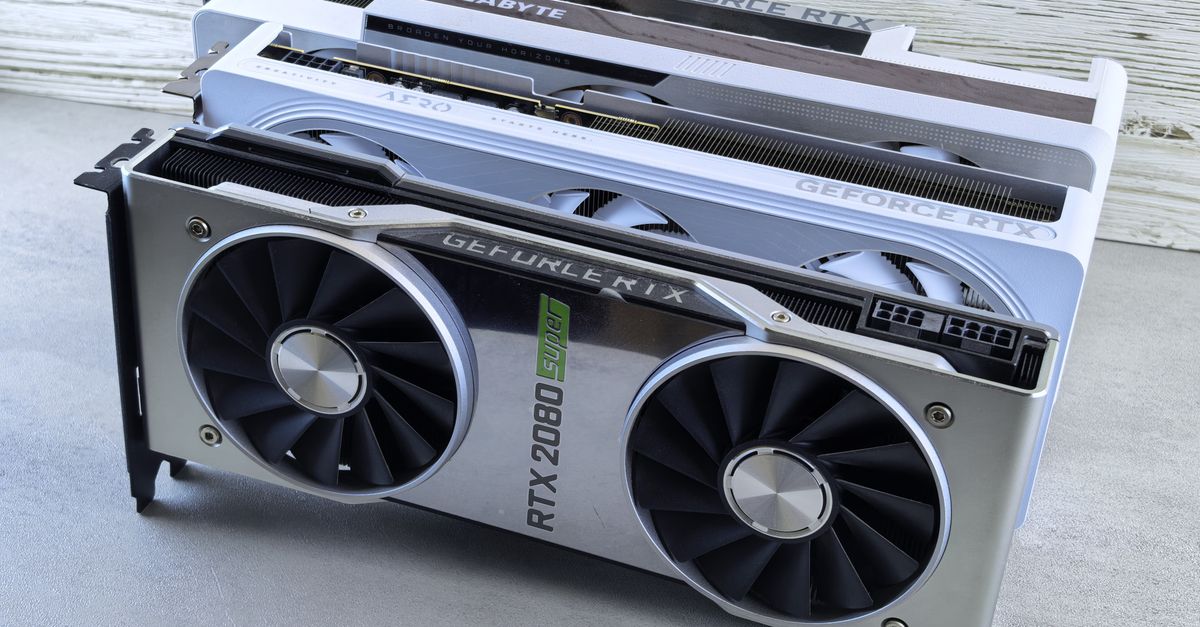
Photo by Andrey Matveev on Pexels
Quick Answer: Decentralized GPU networks aggregate underutilized GPUs from individual owners and data centers into a global, on-demand compute marketplace for AI training and inference. In 2026, the market hosts ~500K GPUs across major networks (Akash, Render, io.net, Golem) — a fraction of AWS/GCP/Azure's fleet (millions) but growing at 3-5x annually. Key insight: the supply is real — consumer GPUs (RTX 4090, 5090) sit idle 60-80% of the time; data center GPUs (A100, H100, B200) have lower utilization in non-peak hours. Economic model: GPU owners earn 60-80% of the rental rate (network takes 10-20% fee). For consumers, inference costs are 60-80% below centralized cloud. Training is more challenging: geo-distributed training across untrusted nodes requires gradient compression (~100x reduction), fault-tolerant checkpointing (nodes disconnect randomly), and differential privacy (prevent model theft). The breakthrough use case: decentralized inference serving — running LLM inference (Llama 3, DeepSeek, Mistral) across thousands of consumer GPUs with 100-500ms latency, comparable to centralized providers at a fraction of the cost. For training, decentralized networks handle: hyperparameter search (embarrassingly parallel), fine-tuning (moderate communication), and model parallel training (high communication — still not competitive with centralized clusters for large models >70B parameters).
Network Architecture
Decentralized GPU Network Stack
┌──────────────────────────────────────────────────────┐
│  Application Layer                                    │
│  Training jobs | Inference API | Batch processing     │
├──────────────────────────────────────────────────────┤
│  Orchestration Layer                                  │
│  Job scheduling | Resource allocation | Monitoring    │
├──────────────────────────────────────────────────────┤
│  Execution Layer                                      │
│  Docker/k8s runtime | GPU virtualization | CUDA      │
├──────────────────────────────────────────────────────┤
│  Network Layer                                        │
│  P2P connectivity | NAT traversal | WireGuard VPN    │
├──────────────────────────────────────────────────────┤
│  Incentive Layer                                      │
│  Token rewards | Slashing | Reputation scores         │
├──────────────────────────────────────────────────────┤
│  Consensus Layer                                      │
│  Availability proofs | Result verification | Staking  │
├──────────────────────────────────────────────────────┤
│  Hardware Layer                                       │
│  RTX 4090/5090 | A100/H100/B200 | Consumer + DC      │
└──────────────────────────────────────────────────────┘

Typical node distribution (Akash Q3 2026):
  Consumer (RTX 3060-4090): 65% of supply
  Prosumer (RTX 5090, 2x4090): 20%
  Data center (A100, H100): 10%
  Enterprise (H100 clusters, B200): 5%
 Photo by jim jorjani on Pexels
Decentralized Inference
The most practical use case — serving LLM inference across distributed GPUs:
class DecentralizedInferenceRouter:
    """Route inference requests across decentralized GPU network."""

    def __init__(self, network_api):
        self.network = network_api
        self.node_registry = {}
        self.latency_cache = {}

    async def infer(self, model_id, prompt, max_tokens=512):
        """
        Route inference to best available GPU.

        Considerations:
        - Model fits on consumer GPU (7B-13B parameters: RTX 4090)
        - Model requires pro GPU (70B+: A100 80GB)
        - Latency requirements (real-time < 200ms, batch OK 2s+)
        - Cost optimization (consumer 3-5x cheaper than DC)
        """

        # 1. Filter available nodes with model loaded
        candidates = await self._find_available_nodes(model_id)

        # 2. Score by latency, cost, reliability
        scored = []
        for node in candidates:
            latency = self._estimate_latency(node)
            cost = node.current_price_per_token
            reliability = node.reputation_score

            score = self._compute_score(
                latency=latency,
                cost=cost,
                reliability=reliability
            )
            scored.append((node, score))

        # 3. Select best node
        best_node = max(scored, key=lambda x: x[1])[0]

        # 4. Route inference
        result = await self.network.request_inference(
            node_id=best_node.id,
            model=model_id,
            prompt=prompt,
            max_tokens=max_tokens
        )

        return result

    async def parallel_infer(self, model_id, prompts):
        """Parallel inference across multiple GPUs."""
        nodes = await self._find_available_nodes(model_id, count=len(prompts))

        # Fan out requests
        tasks = [
            self.network.request_inference(
                node_id=nodes[i].id,
                model=model_id,
                prompt=prompt,
            )
            for i, prompt in enumerate(prompts)
        ]

        return await asyncio.gather(*tasks)
Distributed Training
Gradient Compression for Geo-Distributed Training
class GradientCompressor:
    """
    Compress gradients before transmission over slow WAN links.

    Problem: gradient for a 7B model = 28 GB per sync step
    On fast DC interconnect (800 Gbps): 0.28s
    On consumer internet (100 Mbps): 2240s (37 min!) — useless

    Solution: compress by 100-1000x.
    """

    def compress_sparsification(self, gradient, sparsity=0.99):
        """
        Keep only top 1% of gradients by magnitude.

        Insight: most gradient values are near zero.
        Top 1% captures ~90% of the information.
        """
        flat = gradient.flatten()
        k = max(1, int(flat.numel() * (1 - sparsity)))

        # Find top-k values
        values, indices = torch.topk(flat.abs(), k)

        # Keep only these values and their indices
        compressed = {
            'values': flat[indices],
            'indices': indices,
            'shape': gradient.shape,
        }

        # Compression ratio: ~100x
        return compressed

    def compress_quantization(self, gradient, bits=8):
        """Quantize FP32 to INT8 — 4x compression."""
        # Min-max quantization
        min_val = gradient.min()
        max_val = gradient.max()

        scale = (max_val - min_val) / (2**bits - 1)
        quantized = ((gradient - min_val) / scale).to(torch.uint8)

        return quantized, scale, min_val

    def send_gradients(self, gradient, compress_func):
        """Send compressed gradients over WAN."""
        compressed = compress_func(gradient)

        # Size comparison
        original_size = gradient.element_size() * gradient.numel()
        compressed_size = self._estimate_size(compressed)

        # Send compressed
        self.send(compressed)

        return original_size / compressed_size  # Compression ratio
Related Reads
- DePIN + AI: Decentralized Physical Infrastructure Networks for Machine Learning
- Akash vs io.net vs Render: Best DePIN GPU for AI Training
- Decentralized GPU Network Reliability: Production Reality Check 2026
GPU Virtualization and Multi-Tenancy Challenges
Decentralized GPU networks must isolate workloads from untrusted node operators while maximizing hardware utilization. Unlike centralized clouds—where virtualization is handled by hypervisors like KVM or NVIDIA’s vGPU—decentralized networks rely on lightweight, container-based solutions (e.g., Docker + NVIDIA Container Toolkit) with additional security layers. Key challenges include:
- Memory isolation: Consumer GPUs (e.g., RTX 4090) lack hardware virtualization (unlike A100/H100 with MIG). Solutions include CUDA Unified Memory with process-level isolation or runtime memory scrubbing between jobs to prevent data leakage.
- Performance interference: Multi-tenant workloads (e.g., inference + training) contend for GPU resources. Networks use static partitioning (e.g., reserving 80% of VRAM for inference) or dynamic scheduling (e.g., Kubernetes with GPU resource quotas) to mitigate contention.
- Driver compatibility: Consumer GPUs often run outdated drivers, causing CUDA compatibility issues. Networks enforce minimum driver versions (e.g., CUDA 12.3+) and provide pre-configured container images to standardize environments.
For data center GPUs, networks leverage NVIDIA’s Multi-Instance GPU (MIG) to partition A100/H100 into isolated instances (e.g., 7x 10GB slices). This enables secure multi-tenancy but reduces flexibility—MIG partitions are fixed at boot, limiting dynamic allocation. Emerging solutions like AMD’s ROCm or Intel’s oneAPI may offer alternatives, but adoption lags behind NVIDIA’s ecosystem.
Latency Optimization for Real-Time Inference
Achieving <200ms latency for real-time inference (e.g., chatbots, interactive AI) across decentralized GPUs requires optimizing three layers: network routing, model loading, and execution.
- Network routing: Latency varies by 10-100x depending on node location (e.g., 10ms for same-city vs. 300ms for intercontinental). Networks use:
- Geographic sharding: Route requests to nodes within a 50ms latency radius (measured via ICMP or WebRTC probes).
- Edge caching: Deploy lightweight proxies (e.g., Cloudflare Workers) to terminate TLS and route requests to the nearest available GPU.
- Predictive pre-warming: Pre-load models on nodes likely to receive traffic (e.g., based on historical patterns or time-of-day).
- Model loading: Loading a 7B model (14GB) from disk to GPU memory takes 5-30s. Networks reduce this via:
- Persistent model caches: Nodes keep frequently used models (e.g., Llama 3 8B) in GPU memory between jobs, evicting less popular models.
- Quantized models: 4-bit quantization (e.g., GPTQ) reduces model size by 4x, cutting load time to 1-5s.
- Memory pooling: Reuse GPU memory across jobs (e.g., NVIDIA’s CUDA Memory Pool) to avoid reallocation overhead.
- Execution: Inference speed depends on GPU utilization and kernel optimization. Networks optimize via:
- Batching: Combine multiple requests into a single batch (e.g., 8-32 prompts) to maximize GPU throughput, though this increases latency for individual requests.
- Kernel fusion: Fuse operations (e.g., attention + feed-forward) to reduce memory bandwidth bottlenecks.
- Speculative decoding: Use smaller models (e.g., 1B parameter) to predict tokens, falling back to the full model for corrections (reduces latency by 20-40%).
For latency-sensitive applications (e.g., voice assistants), networks prioritize nodes with:
- Low-latency internet (e.g., fiber, <10ms to major IXPs).
- High-end GPUs (e.g., RTX 4090/5090 with PCIe 4.0).
- Local storage (e.g., NVMe SSDs) to minimize model load time.
Economic Incentives and Market Dynamics
Decentralized GPU networks rely on tokenized incentives to align supply (GPU owners) and demand (AI developers), but market dynamics introduce unique challenges:
- Pricing mechanisms: Networks use dynamic pricing models to balance supply and demand:
- Spot pricing: Nodes set prices based on local electricity costs, hardware amortization, and demand (e.g., $0.10-$0.50/hour for RTX 4090).
- Auctions: For high-priority jobs, networks run sealed-bid auctions where nodes compete to offer the lowest price (e.g., Akash’s reverse auction).
- Staking requirements: Nodes must stake tokens (e.g., 1,000 AKT on Akash) to participate, with slashing for downtime or cheating. Staking reduces supply volatility by discouraging fly-by-night providers.
- Supply elasticity: Consumer GPU supply is highly elastic—owners join/leave based on earnings. Networks incentivize long-term participation via:
- Loyalty bonuses: Nodes earn 5-10% higher rewards for continuous uptime (e.g., 30+ days).
- Hardware subsidies: Networks partner with GPU manufacturers (e.g., NVIDIA, AMD) to offer discounts or cashback to node operators.
- Electricity arbitrage: Nodes in regions with cheap electricity (e.g., Iceland, Texas) earn premiums for low-cost compute.
- Demand drivers: AI developers adopt decentralized networks for:
- Cost savings: 3-5x cheaper than cloud for inference, 2-3x for training (excluding communication overhead).
- Avoiding vendor lock-in: No long-term contracts or proprietary APIs (e.g., AWS SageMaker).
- Edge deployment: Run inference on nodes close to end-users (e.g., gaming PCs in Europe for EU data residency).
- Market inefficiencies: Challenges include:
- Information asymmetry: Node operators lack visibility into demand, leading to over/under-supply. Networks address this via demand forecasting (e.g., Akash’s public dashboard).
- Liquidity fragmentation: Supply is split across networks (Akash, io.net, Render), reducing efficiency. Aggregators (e.g., GPUtopia) emerge to pool liquidity.
- Regulatory uncertainty: Tax treatment of token rewards varies by jurisdiction (e.g., capital gains vs. income), complicating node operator economics.
Networks experiment with novel incentive structures, such as:
- Reputation-weighted rewards: Nodes with higher uptime/reliability earn disproportionate rewards.
- Job-specific bonuses: Higher payouts for latency-sensitive or high-memory jobs.
- Community pools: A portion of network fees funds public goods (e.g., open-source model hosting).
Key Takeaways
- Decentralized GPU networks aggregate idle consumer and data center GPUs (RTX 4090/5090, A100/H100) into a global compute marketplace, reducing inference costs by 60-80% vs. centralized cloud by leveraging underutilized hardware (60-80% idle time) and eliminating data center overhead.
- Gradient compression (100-1000x via sparsification/quantization) and fault-tolerant checkpointing are critical for geo-distributed training, enabling practical use cases like hyperparameter search and fine-tuning for models up to 13B parameters—though large models (>70B) remain impractical due to communication bottlenecks.
- Decentralized inference (e.g., Llama 3, Mistral) achieves 100-500ms latency by routing requests to the best available GPU based on model size, latency, cost, and node reputation, with consumer GPUs (3-5x cheaper than data center) handling 7B-13B models and prosumer/data center GPUs managing 70B+ workloads.
- Node cheating is mitigated through challenge-response (synthetic inputs with known outputs), redundant execution (cross-verifying results across 2-3 nodes), and token staking (penalties for misbehavior), though training verification remains harder than inference due to the difficulty of detecting partial work.
- The economic model favors GPU owners (earning 60-80% of rental rates) and consumers (paying 3-5x less than cloud), but requires balancing supply tiers: consumer GPUs (65% of supply) dominate for cost-sensitive tasks, while data center/enterprise GPUs (15%) handle latency-critical or large-model workloads.
- Decentralized networks excel at embarrassingly parallel tasks (e.g., batch inference, hyperparameter search) but struggle with high-communication workloads (e.g., model parallelism for 70B+ models), where centralized clusters with NVLink/InfiniBand retain a performance advantage.
Frequently Asked Questions
Is decentralized GPU compute secure for model training?
Security challenges: (1) Verification — did the node actually train your model or return random results? Solutions: periodic checkpoints with challenge-response, zk-proofs of computation (too expensive for training), trusted execution environments (TEE). (2) Model theft — the node operator sees your model weights. Solutions: differential privacy, obfuscated architecture, encryption at the ISA level (AMD SEV-SNP). (3) Data privacy — training data exposed to node operator. Solutions: federated learning (train locally, share only gradients), fully homomorphic encryption (theoretical, too slow). In practice: decentralized training is used for public models (open-source weights) or tasks where data privacy is less critical (hyperparameter search).
Why is decentralized inference cheaper than centralized?
Three reasons: (1) Utilization: central providers pay for GPUs whether used or not. Decentralized providers already own the GPU (it's there for gaming, rendering, their own work) — they earn "found money" when idle. (2) No data center cost: consumer GPUs run at home with existing electricity and internet. (3) Competition: thousands of independent providers compete on price, unlike oligopolistic cloud. Result: inference is 3-5x cheaper on decentralized networks.
Can you train a 70B+ model on decentralized GPUs?
Not competitively. The communication overhead of model parallelism across unreliable, slow consumer internet connections makes it impractical. For large models: (1) data parallelism across nodes is limited by gradient sync, (2) model parallelism (sharding the model across nodes) requires low-latency interconnects (NVLink, InfiniBand). Practical limit for decentralized training: 7B-13B models with data parallelism, 70B+ only with expert parallelism (MoE where experts are independent) or when using centralized data center GPUs on decentralized networks (Akash's data center tier).
What prevents GPU nodes from cheating?
(1) Challenge-response: periodically send synthetic inputs with known outputs; if node returns wrong answer → penalize. (2) Redundant execution: same job on 2-3 nodes, cross-verify results (costly). (3) TEE: hardware-enforced enclave prevents node from seeing or tampering with computation. (4) Reputation: node operators stake tokens; verified results increase rep, cheating means slashed stake. In practice: inference verification is solved (challenge-response works), training verification is harder (you can't easily spot a node doing partial work).



Comments
Sign in to join the conversation
No comments yet. Be the first to share your thoughts!