

The Email Habit That Gave Me My Evenings Back


The Email Habit That Gave Me My Evenings Back
For years, my evenings had a third person in them: my inbox. Dinner with a phone face-up on the table. "One quick reply" at 9 p.m. that became forty minutes. The low hum of dread that there was always something unanswered, always someone waiting.
I told myself this was responsibility. It wasn't. It was a habit, a bad one, and like most bad habits it was quietly costing me the parts of my life I actually cared about.
Then I made two small rules and set up one automation. Within a week, my evenings were mine again — and, to my genuine surprise, nothing at work fell apart. Here's exactly what I did.
Quick Answer
I reclaimed my evenings with two rules and one automation. Rule one: email gets checked at set times, never continuously, and never after a hard stop in the evening. Rule two: I reply once, fully, instead of dribbling half-answers all day. The automation: an auto-responder plus light triage that catches anything genuinely urgent so I don't have to keep watch. Boundaries plus a safety net equals freedom without dropped balls.
Why "always on" felt safe but wasn't
The reason I kept checking was fear. Fear that something urgent was sitting there. Fear of being the slow one. Fear, mostly, of an imagined emergency that almost never arrived.
But here's what constant checking actually bought me: nothing. The genuinely urgent things — the real ones — were rare, and they reached me other ways. What constant checking cost me was steep: fragmented attention all day, and evenings I never fully inhabited because part of me was always on call.
I was paying a large, daily price to insure against a tiny, rare risk. When I put it that way, the trade looked insane. Because it was. Work from the American Psychological Association on chronic stress points the same direction: it's the constant low-grade vigilance, not the rare genuine emergency, that wears people down over time.
Being reachable every minute isn't dedication. It's an anxiety habit wearing a work costume.
 Photo by Viridiana Rivera on Pexels
Rule one: scheduled checks, hard evening stop
The first rule was about when, not whether.
I stopped checking email continuously and moved to fixed windows — late morning, mid-afternoon, and one final sweep before a hard stop at the end of the day. Outside those windows, the inbox simply isn't open. Not minimized. Closed.
The hard stop is the load-bearing part. I picked a time — for me it's 6 p.m. — after which the inbox does not get opened, full stop, for any reason short of a phone call about a true emergency. No "just a peek." Peeks are how the spiral starts.
What made this survivable was realizing that email is asynchronous by design. It is, by its very nature, the medium that doesn't demand an instant reply. I'd been treating a slow medium like an emergency line, and the medium was never asking me to. The expectation was entirely in my own head. Batching it into windows turned out to be the same move as defending your best hours as real calendar blocks: you decide when the work happens instead of letting it happen to you all day.
Rule two: reply once, fully
The second rule fixed how I replied.
I used to dribble. I'd see an email, fire back a half-answer to look responsive, then go back and forth five times over two days to settle one thing. Each of those exchanges was a fresh interruption and a fresh re-open of the loop.
Now I batch and finish. When I'm in an email window, I deal with each message completely — the full answer, the decision made, the loop closed — so it never comes back. One thorough reply beats five quick ones, both for me and for the person waiting, who'd rather have an answer than five fragments.
A few tactics that make "reply once" work:
- If a reply needs more than a few sentences, I ask whether a five-minute call would close it faster. Often it would.
- I answer the actual question plus the obvious next one, pre-empting the follow-up.
- If I can't answer fully yet, I say exactly when I will — which closes the loop emotionally even if not literally.
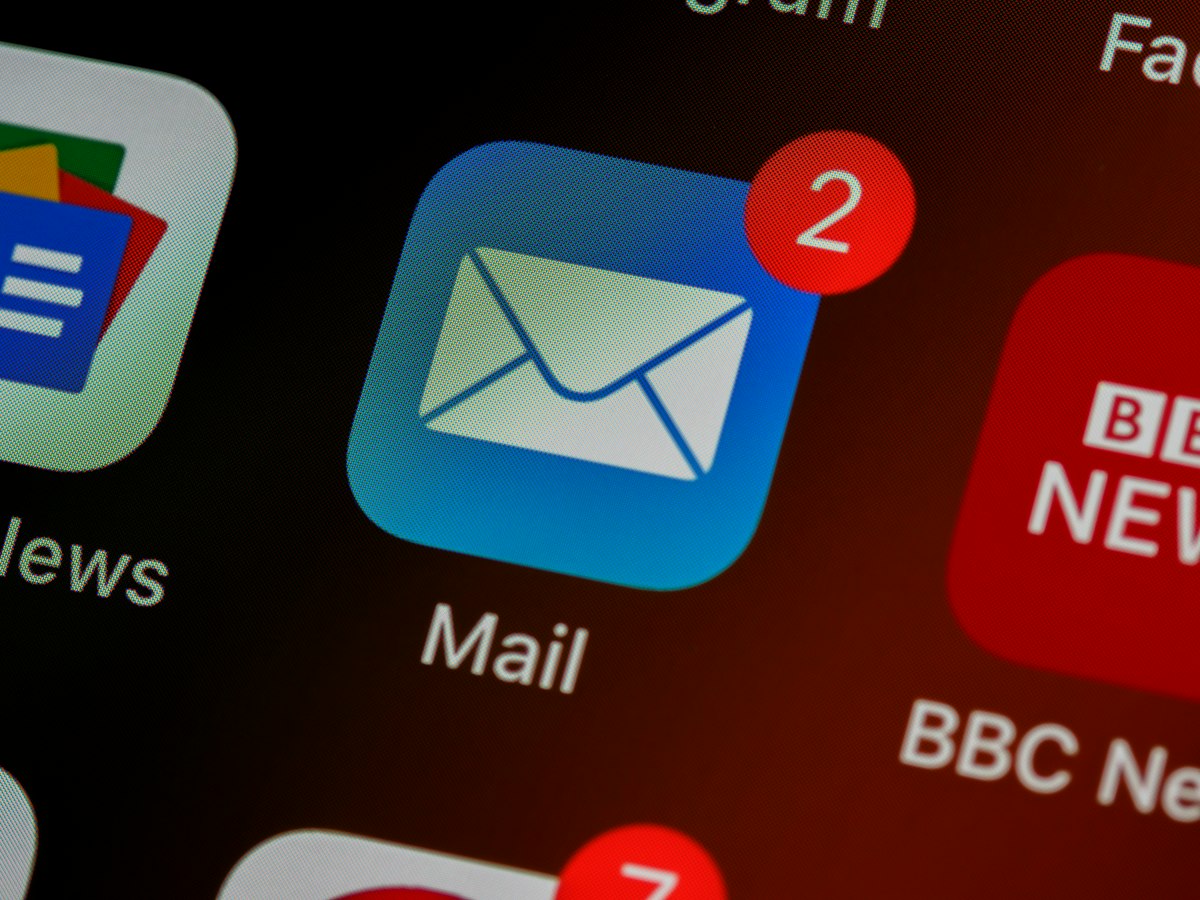
 Photo by Vitaly Gariev on Pexels
The automation that made me brave
Rules alone weren't enough. The fear of missing something urgent still tugged at me every evening. The automation is what let me actually trust the boundary.
Here's the setup. I lean on email automation and an AI assistant to stand watch so I don't have to:
- An auto-responder outside my email windows sets expectations: I check email at set times and will reply by the next one. This single message defused most of the anxiety, mine and other people's.
- Light triage scans incoming mail and surfaces only the rare genuinely urgent item, by a channel I do watch in the evening (a text). Everything else waits for the morning window, untouched.
- The assistant drafts replies to routine messages so my morning window is faster — I approve and send rather than compose from scratch.
The triage is the brave-maker. I'm not ignoring my inbox and hoping. I have a system actively watching for the one-in-fifty message that truly can't wait, which means I can completely let go of the other forty-nine until tomorrow. The safety net is what makes the boundary feel responsible instead of reckless.
What actually changed at home
The first evening I held the hard stop, I felt twitchy. Like I'd forgotten something. By the end of the week, the twitch was gone and something else had shown up: presence.
Dinner without a phone on the table. A whole conversation I was actually inside of. The realization that the imagined emergencies were, in fact, imagined — three months in, the triage has flagged a true after-hours urgency a tiny handful of times, and every routine thing waited perfectly happily until morning.
The work didn't suffer. If anything it improved, because batched, complete replies are higher quality than anxious fragments. I became more reliable, not less, by being reachable less.
Handling the awkward edge cases
The clean rules cover ninety percent of email. It's the other ten percent — the genuinely awkward situations — that make or break a boundary like this, so let me be specific about how I handle them.
The boss who emails at night. Some managers genuinely do fire off messages at 10 p.m. The mistake is assuming each one demands an instant reply. Most don't; they're just clearing their own head before bed. I let mine sit until my morning window and reply fully then. In the rare case where something truly is urgent, my manager knows to text or call — because I told them, once, kindly, what my channels are. Setting that expectation explicitly removed almost all the ambiguity.
The thread that's spiraling. Some email chains breed. Five people, twenty replies, no decision. When I spot one, I break my own batching rule deliberately and kill it — usually by proposing a fifteen-minute call or stating a clear decision that ends the loop. A spiraling thread is exactly the kind of motion that masquerades as work, and the fastest reply is often the one that ends the conversation entirely.
The "quick favor" that isn't quick. These are the most dangerous, because they look like a two-minute yes and become a two-hour commitment. I've learned to answer the real scope honestly: "Happy to help — this is bigger than it looks, can we find thirty minutes?" That reframes a sneaky favor into an explicit one, which lets me actually plan for it instead of letting it eat an evening.
The guilt of an unread count. For a chronic checker, a number-badge over the mail icon is genuine torment. The fix was embarrassingly literal: I turned off the badge. Out of sight really is out of mind here. The count was never information I needed in real time; it was just a low-grade anxiety generator, and removing it removed the pull.
None of these edge cases required heroics. They required deciding, in advance and calmly, how I'd handle the predictable awkward moments — so that in the moment, tired and tempted, I already knew the move and didn't have to negotiate with myself.
The bottom line
I didn't need a new inbox or a better app. I needed to stop treating a slow, asynchronous medium like a 24-hour emergency line, and a small safety net brave enough to trust the boundary.
Your evenings are not a buffer for your inbox. Two rules and one automation gave mine back, and the sky never fell.
What time could you set as your hard stop tonight? Pick one. Close the laptop when it arrives. See what's been waiting for you at the dinner table.
Key Takeaways
- Set fixed email-checking windows (e.g., late morning, mid-afternoon, pre-stop) and close your inbox completely outside those times—no peeking—to break the cycle of continuous interruptions.
- Enforce a hard evening stop (e.g., 6 p.m.) where email is off-limits unless a true emergency arises, communicated via a faster channel like a phone call or text.
- Replace fragmented, half-answers with single, thorough replies during your email windows—close loops fully to avoid follow-up threads and rework.
- Use an auto-responder outside your email windows to manage expectations (e.g., 'I check email at X times and will reply by Y') and reduce anxiety for both you and senders.
- Implement light triage (e.g., AI or rules-based filtering) to surface only genuinely urgent messages after hours, letting everything else wait until your next window without guilt.
- Handle edge cases proactively: turn off unread badges, reframe 'quick favors' as explicit commitments, and break spiraling threads with decisive calls or decisions.
Frequently Asked Questions
What if my boss expects instant replies at night?
Some genuinely do, and that's a real constraint. But many "expectations" are assumed, not stated. The auto-responder tests the assumption gently. Most of the time, no one minds.
Won't an auto-responder annoy people?
Mine is warm and specific — it tells people exactly when I'll reply. People don't resent clarity. They resent silence and uncertainty, both of which the auto-responder removes.
How do I handle truly urgent things after hours?
Define a real urgent channel — a phone call or text — and let triage route only genuine emergencies there. Urgent things have always had a faster path than email anyway.
Isn't batching to set windows slower for everyone?
It feels slower and is actually faster. Complete replies close loops; fragmented ones spawn threads. Fewer, fuller responses move work forward quicker.





Comments
Sign in to join the conversation
No comments yet. Be the first to share your thoughts!